By Jean M. Hill (Springdale School District, Arkansas) and Angie Albright (Shiloh Museum of Ozark History)
Download PDF – Spring 2026, Article 3
The history of a place is as unique as the individuals within it. When communities that were once very rural experience accelerated growth in a short amount of time, a unique opportunity arises for people to connect to the history of a place. One educator in Arkansas addressed this need by participating in The Rural Experience in America project, working with students, educators, and community partners to create and share local public history projects. Learning about local history is essential and builds trust and respect for the historical significance of a place. Brugar (2023) notes that “learning about local history turns the patterns of historical change into concrete stories that tell about the lives of individuals” (p. 18).
Through inquiry practices, the collection of oral histories, and primary source analysis and development, middle school students (grades 6-7), educators, and community members engaged as local historians who contributed to The Rural Experience in America public history project over a three-year span. This process provided participants with an opportunity to connect to history, challenge assumptions about local history, and contribute to the collection of local primary sources. Individuals worked in partnership with community advocates and historians to record the contributions of community leaders, mentors, and family legacies, ensuring that recent local history was preserved for their community and future generations. Their efforts were guided by the following questions:
- Year 1: How have diverse leaders in Arkansas facilitated transformational change?
- Year 2: How do our experiences of home shape our voices in community?
- Year 3: How have our experiences shaped the assets of our community?
During the project’s inaugural year centered on “Transformational Voices of a Growing Region,” these guiding questions provided participants with multiple perspectives through which to engage with and collect local history. Culminating project experiences celebrated community and recent contributions to local history, while also addressing needs in local historical collections. In partnership with local historians, community leaders, artists, educators, and students, community stakeholders had a chance to engage in historical thinking and artifact formulation processes.
Year 1: Diverse Voices of a Growing Region
The project’s first year launched with a teacher-facilitated exploration of a selection of oral histories from Arkansas from the Library of Congress’s American English Dialect Recordings: The Center for Applied Linguistics Collection and local oral history archives. Additionally, students researched materials available in the Library’s Born in Slavery: Slave Narratives from the Federal Writers’ Project, 1936 to 1938 Collection, focusing on Arkansas narratives. In particular, students examined the structure of oral histories and formulated questions and ideas to address the following: What can we learn from historians about how to conduct oral history interviews? Based on our exploration, what questions might we consider including in our oral history work that elevates previously absent voices in our local oral history collections?
Students developed a historical understanding of oral history recording practices and artifacts collected within the past century. Their research efforts led to the discovery that additional work was needed to capture and preserve the oral and visual history of the most recent 40 years of local history. This investigation supported the focus of Year 1’s work, amplifying histories that had not yet been recorded in the local area, especially those of leaders from diverse backgrounds who contributed to and reflected the influence of the rapidly changing demographics of Arkansas.
Students analyzed oral histories in local archives to determine whose voices were not yet represented. They evaluated the current state of local oral history collections and collaborated with educators and local historians to identify the voices and lived experiences needed to provide a more comprehensive representation. These missing voices reflected the assets and current demographics of the area and challenged misconceptions about spaces historically or currently considered rural. Initially, the lead educator worked with community partners to conduct oral history interviews with diverse leaders reflecting the region’s recent cultural and linguistic demographic shifts. These initial interviews served as both a foundation and a model for subsequent student-collected oral histories.
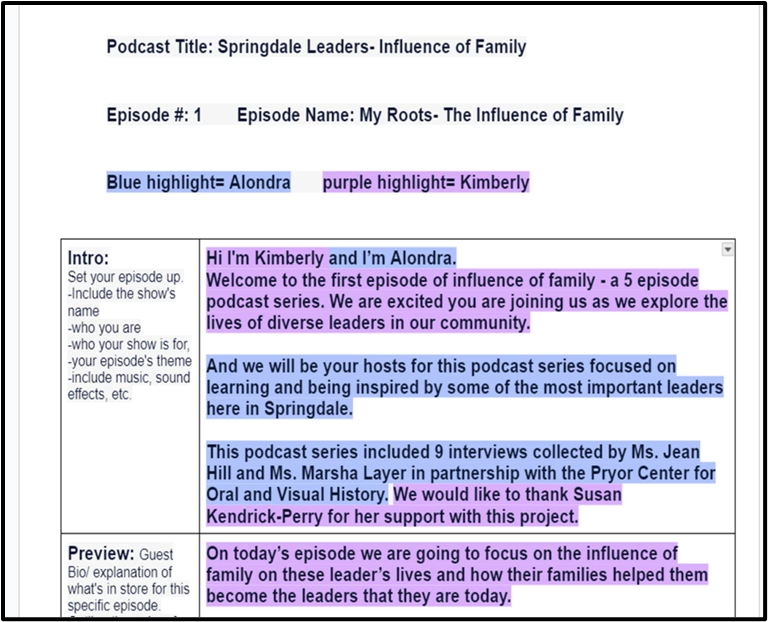
Students analyzed collected recordings to identify themes, formulated additional follow-up questions for a second round of student-facilitated interviews with the initial interviewees, and determined next steps to increase the diversity of the collection of community oral histories. They worked with educators and community leaders to synthesize local oral history recordings into student-friendly digestible podcast episodes and interactive displays for students, educators, and historians to use in classroom and community settings.
Figure 1: Excerpt from student-created podcast episode from year 1 of the public history project.
Year 2: Voices of Home
The second year of work extended the opportunity to highlight multiple voices from the local region. Project efforts shifted from the macro view of community contributions to a family-based focus of capturing experiences of home within the local area. Year 2 launched with an exploration of curated primary source images from Library of Congress digital collections depicting various perspectives of home locally. During the activity, one of the initial questions led students to consider how much they knew about local history. Through discussion, it quickly became evident that “not many kids know our history, but they live here,” as student Melanie G. stated. Multiple students also voiced the need to teach more students and families about local history.
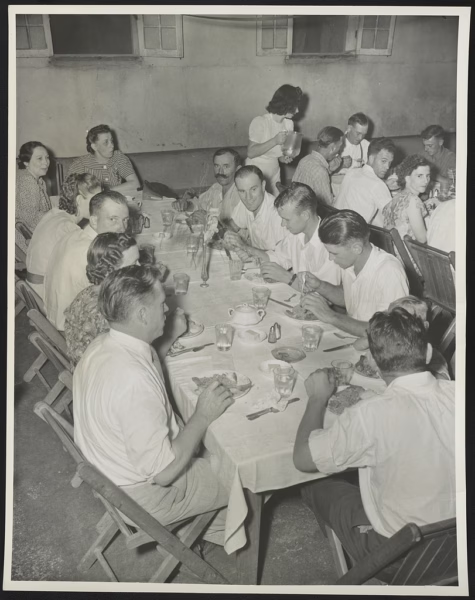
Figure 2: Spaghetti Supper at Tontitown Grape Festival (Library of Congress, 1941).
Responses from student historians prompted a close examination of the selected Library’s images of local experiences of home that connected to recent student and community experiences, including Figures 2-4. Working in small groups, students formulated a list of questions related to their assigned images, using a process similar to that demonstrated in the Library of Congress’s Every Photo Is a Story Part 1: Start to Read a Photograph (2013) series. Students recorded their findings and engaged with the images through multiple points of inquiry. Group members then shared their questions and identified common themes and connections across the primary sources they examined.
- What similarities and differences exist between the meal in Figure 2 and the meal that was served at our recent grape festival?
- Who is missing in the image? Where are they?
- Do any of the relatives of these people in the picture still attend the grape festival?
- Who are they?
- Where do they live?
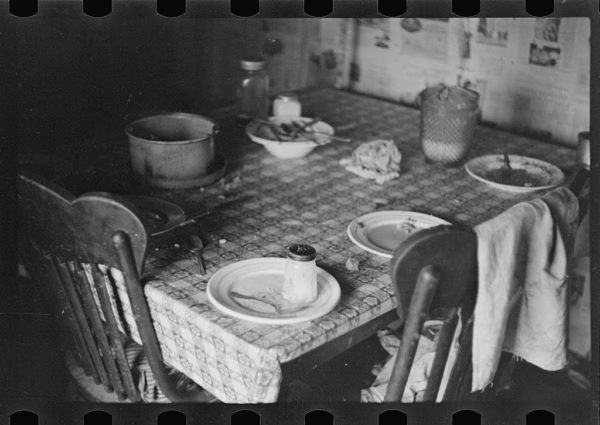 Figure 3: Table of home of destitute Ozark family, Arkansas (United States Resettlement Administration, Shahn, B., photographer, 1935).
- Why are there newspapers on the wall?
- Who sat at this table?
- What stories were shared around this table?
- What is in the glass container?
- How is this kitchen table similar and different to where people in our area eat today in their homes?
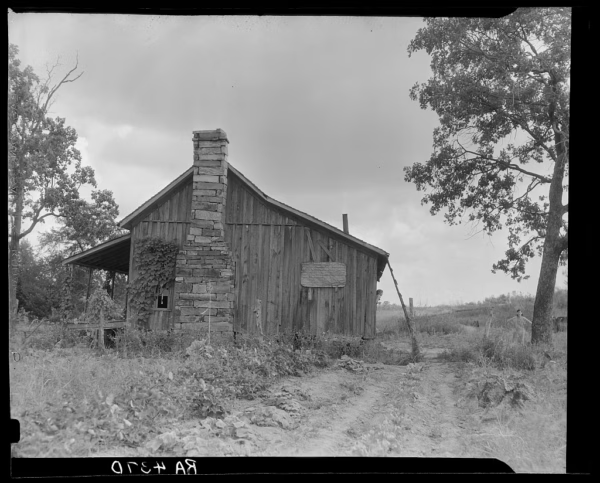 Figure 4: Sharecropper’s cabin. Washington County, Arkansas. (Rothsetin, 1935)
- Who lived there?
- Why is the outside made of wood?
- Did the house always look like this or did people add on to it?
Students selected questions they or fellow student historians might explore to further support the collection of experiences of home in their local community. They investigated these questions through multiple learning experiences that allowed them to continue exploring primary sources from the Library of Congress related to life in Arkansas. Student Melanie G. reflected on this experience, saying, “There are many people who live here who don’t know the history here or how much we’ve changed.” Researchers were tasked with the opportunity to address this need during their participation in the project.
Student inquiry questions contributed to a community-supported primary source collection effort where students, families, and community members added to a tapestry display of original primary sources developed throughout the duration of the project. Shared artifacts were transferred directly onto a textile display platform and embellished with embroidery by students and community members. The use of needlework as a vehicle for preserving history was recognized as a local historical practice among several ethnic groups currently residing in the area.
This collection initiative aligned with the Shiloh Museum of Ozark History’s exhibit Ozarks Beyond the Frame, a local history exhibition highlighting artifacts and experiences of home in the region. In a collaborative effort to expand the collection of local artifacts centered on experiences of home, visitors who viewed the public display were invited to contribute their own personally developed or collected artifacts as local historians. The sequence of displays and interactive opportunities gave many community members the chance to include their experiences in the local historical record—some for the first time in their lives.
Additional primary sources were developed in partnership with local art educator, Addison Peters, including a community cookbook that captured the food history of the local area. This work extended the food-based primary source investigations from the launch of Year 2’s project. The cookbook included the student-driven contributions, including recipes that reflected the voices and experiences of home in the community. Student historians partnered with families and community members to collect and preserve recipes from culturally and linguistically diverse backgrounds. The final cookbook was shared in both digital and print formats, offering multilingual families the opportunity to access the content using technology tools in languages other than English.
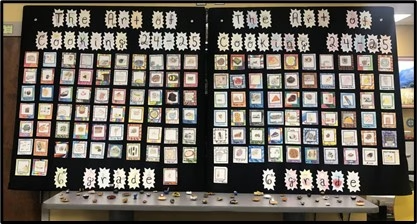
As part of the cookbook creation process, in partnership with Peters, educators guided students in writing their recipes and composing reflections that highlighted their personal connections to the dishes. Student historians also created their own artifacts inspired by their recipes. These included hand-drawn illustrations, hand-sculpted refrigerator-magnet-sized models, and larger baker’s clay sculptures of each recipe. Students shared their artistic creations with families and recipe contributors as a hands-on way to experience the final product. Each artistic contribution was featured in the final cookbook publication, which was distributed among educators and community stakeholders. The recipes in the cookbook represented the region’s many cultural influences, fostering additional student inquiry and reflection about the changing demographics of the local area.
Educators and community members also supported the development of student-created primary sources through a series of lessons connected to the concepts of home and family, and the history of Japanese American incarceration in Arkansas, in partnership with local artist and art educator, Lori West. Students partnered with their families to record the most valuable “artifacts of home” in both written and artistic forms. Several entries were embellished with artistic techniques, including quilting and embroidery, completed by teachers and students. These contributions were shared with the community during a culminating multimedia public history exhibit.
Figure 5: Student and Teacher Contributions to Primary Source Collection During the Year Two Project
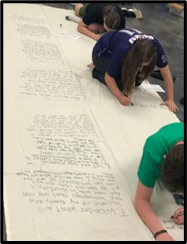
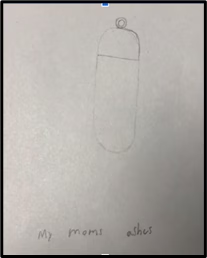
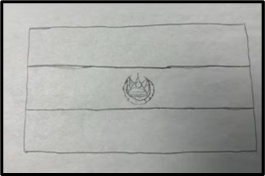
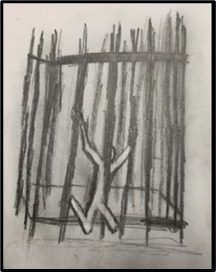
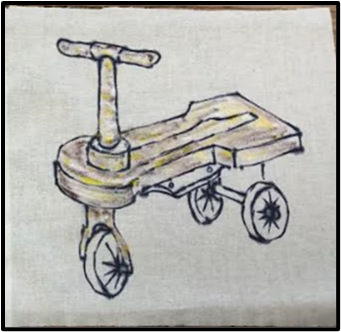
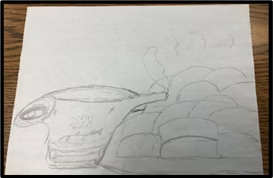
Figure 6 : Community Contributions of Primary Sources Collected During a Local Community Night
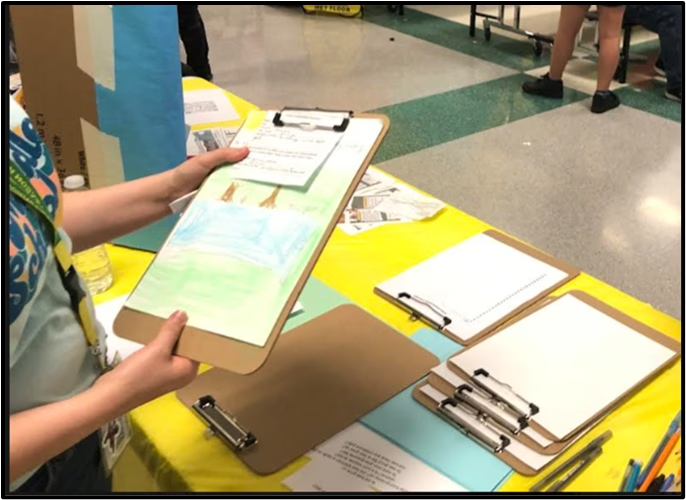
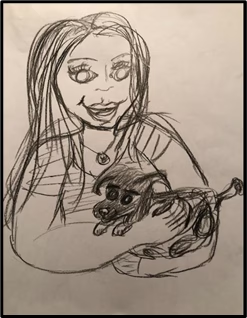
Figure 7: Community Partner and Student Embroidery of Primary Source Tapestry
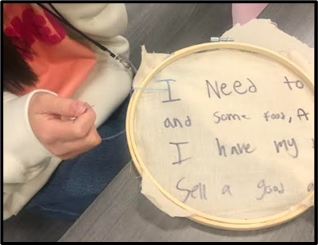
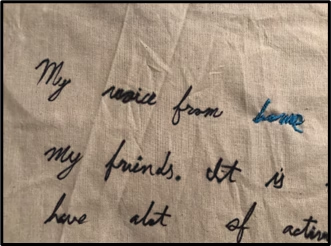
Figure 8: A Sampling of Tapestry Displays
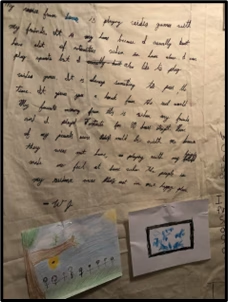
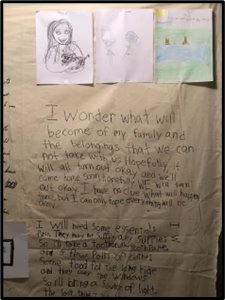
Figure 9: The Art of Cooking Cookbook from the Year Two Project
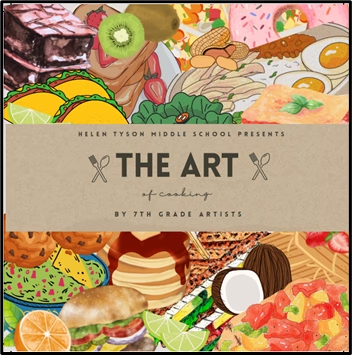
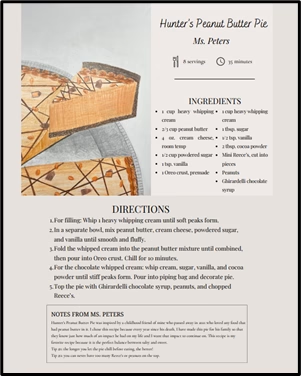
Figure 10: Student Art of Local Favorite Recipes Featured in The Art of Cooking from the Year Two Project
Year 3 and Beyond: Celebrating Community
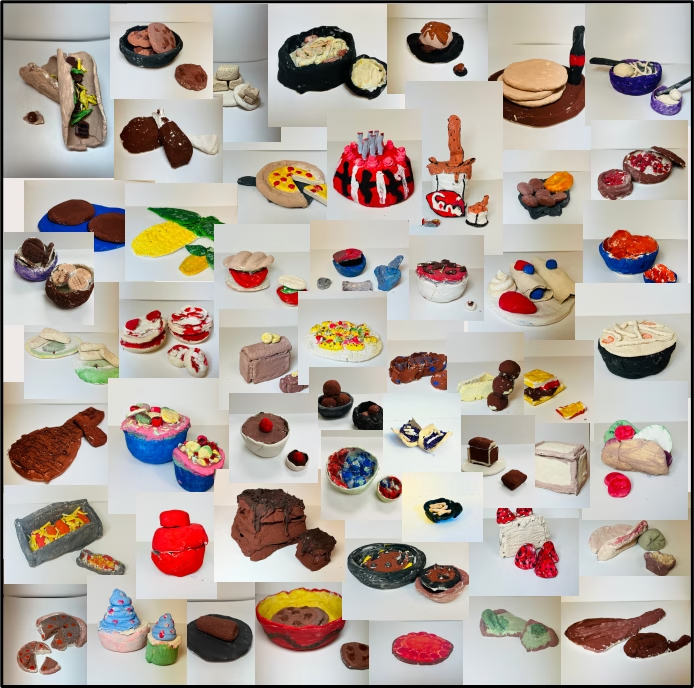
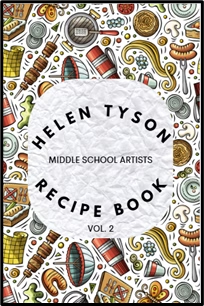
The final year of participation in The Rural Experience in America culminated with a celebratory exhibit of all contributions and provided ongoing opportunities for community members to continue to add to the recently cultivated local primary source collection. Educators, students, and community partners collaborated to develop portable, place-based educational resources using materials created during the three-year project for future local educational and community use. A student- and educator-driven team partnered with community members to produce a second cookbook, featuring multimedia artistic and written contributions from students across multiple grade levels, supported by their families. These contributions reflected the stories and heritage of the region. The creation of a place-based cookbook became an annual practice offered through art education experiences in the local school district. The cookbooks were featured in the culminating project celebration and at local history conference presentations, highlighting the contributions of leaders, families, and students.
Celebration efforts also included interactive historical exhibits and a public display of art and narrative in a portable exhibit shared in multiple public spaces. Families and community members enhanced and documented local historical experiences while viewing collected artifacts. Reflecting on the project’s next steps, student Melanie G. stated, “What I’m really interested in is the family relationships we have now. Even with the littlest things, like eating at a table…I want to see how relationships connect.” The connections she described represent an asset for sustaining public history experiences for students, teachers, and community partners.
As this project’s third year concluded, the lead educator continued partnering with local historians and museums to develop protocols that support expanding public history projects to other educators and community partners in the region through professional development opportunities and resource development. The three-year process affirmed that “local history is vital to increasing one’s understanding of historical processes” (Brugar, 2023, p. 18). As educators and community partners continued to work with students to explore and preserve local history, they equipped the next generation of citizens to recognize and respect the unique historical assets held by each community.
Figure 11: Sampling of Student Contributions to Year 3 Project
![[Small colorful items that appear to be differently made cookies]](https://tpsconsortiumcreatedmaterials.org/wp-content/uploads/2026/01/Picture19.avif)
![[Carne Asada Recipe]](https://tpsconsortiumcreatedmaterials.org/wp-content/uploads/2026/01/Picture21.avif)
![[Donut with a bite taken out of it]](https://tpsconsortiumcreatedmaterials.org/wp-content/uploads/2026/01/Picture22.avif)
__________
Jean M. Hill is an instructional facilitator in the Springdale School District in Springdale, AR. She was a participant and teacher leader in the National Council for History Education’s Rural Experience in America: Community Civics through Historical Inquiry TPS project. As a coach, she supports teachers and students in classroom and community-based educational experiences, with an emphasis on primary source integration across disciplines and developing and sharing original local primary sources in collaboration with students, families, and community partners.
Angie Albright is the Director of the Shiloh Museum of Ozark History in Springdale, AR. She taught college English and literature for seventeen years and now focuses on making history accessible through the museum’s exhibits, programming, and events. She was a participant in the National Council for History Education’s Rural Experience in America: Community Civics through Historical Inquiry TPS project. She was born and raised in rural Iowa, and she brings her passion for documenting and celebrating rural life and history to Shiloh Museum.
__________
References
Brugar, K. A. (2023). Everything is L.O.C.A.L.! Making curricular connections with history close to home. Social Studies and the Young Learner, 36(2), 17–21.
Library of Congress. Collection Items. Collection: American English Dialect Recordings: The Center for Applied Linguistics Collection. Library of Congress. https://www.loc.gov/collections/american-english-dialect-recordings-from-the-center-for-applied-linguistics/?fa=segmentof%3Aafc1986022.afc1986022_ms1103%2F%7Csubject%3Aafrican+american+women&st=gallery&sb=shelf-id.
Library of Congress. Collection Items. Collection: Born in Slavery: Slave Narratives from the Federal Writers’ Project, 1936 to 1938. Library of Congress. https://www.loc.gov/collections/slave-narratives-from-the-federal-writers-project-1936-to-1938.
Library of Congress, Prints And Photographs Division. (2013) Every Photo Is a Story Part 1: Start to Read a Photograph. Washington, D.C.: Library of Congress, -05-02 [Video]. Library of Congress. https://www.loc.gov/item/2021689105/
Peters, A., Editor. (2024). Helen Tyson Middle School Presents the Art of Cooking by 7th grade Artists. Vol. 1.
Peters, A. Editor (2025). Helen Tyson Recipe Book: Middle School Artists. Vol. 2
Rothstein, A. (1935). Sharecropper’s cabin. Washington County, Arkansas. Arkansas Washington County United States, 1935. Nov. [Photograph]. Library of Congress. https://www.loc.gov/item/2017758949/
Spaghetti supper at Grape Festival, Tontitown, Arkansas. (1941). Washington County Arkansas, 1941 [Photograph]. Library of Congress. https://www.loc.gov/item/2012647029/
United States Resettlement Administration. (1935). Table in home of destitute Ozark family, Arkansas. Ozark Mountains Arkansas United States, 1935. Oct. [Photograph]. Library of Congress. https://www.loc.gov/item/2017730157/